The ultimate guide to selecting connectors for harsh environment sensors

The ultimate guide to selecting connectors for harsh environment sensors

When designing electronic systems that operate in harsh environments such as automotive, industrial, aerospace or outdoor environments, selecting the right sensor connectors is critical to ensure reliability, durability and performance. Harsh environments often mean exposure to extreme temperatures, vibrations, moisture, dust and chemicals that can affect sensor connectivity. In this extremely comprehensive guide, we describe…

Read more
Choosing the right connector for LMR coaxial cable the perfect conductor

Choosing the right connector for LMR coaxial cable: the perfect conductor

When using LMR coaxial cables, it is important to choose the right connectors to ensure optimal signal integrity, low signal loss and reliable system performance. LMR cables are known for their high quality and flexibility and are widely used in applications such as telecommunications, networking, broadcasting and radio frequency ( RF) systems. This guide discusses…

Read more
Hall sensors principle of operation and applications

Hall sensors: principle of operation and applications

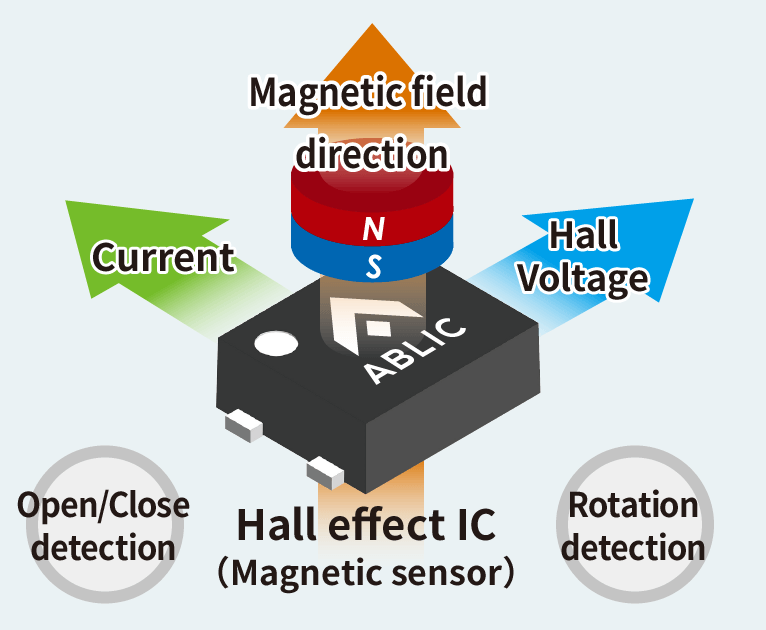
Hall sensors , which accurately and contactlessly detect magnetic fields, play an important role in modern electronic devices. Due to their reliability, small size and versatility, they are used in a wide range of applications, including automobiles, consumer electronics, industrial automation and medical devices. In this article, we’ll explain what Hall sensors are, how they…

Read more
CCD and CMOS sensors an in-depth comparison for imaging

CCD and CMOS sensors: an in-depth comparison for imaging

Two types of image sensors dominate the digital imaging market: CCD (charge-coupled devices) and CMOS (complementary metal oxide semiconductors). These two technologies are at the heart of all types of digital system cameras, industrial visual systems and medical imaging equipment, consumer electronics and automotive cameras. In this article, we will thoroughly compare CCD and CMOS…

Read more
tram-2384693_1280-1

Meta Vision: CMOS Image Sensors that Surpass the Human Eye

Introduction With the rapid advancement of technology, the application of image sensors is no longer limited to the visible spectrum range of humans. CMOS image sensors (Complementary Metal-Oxide-Semiconductor) are set to develop “Meta Vision” technology that will exceed the capabilities of the human eye in the future. This emerging technology will bring revolutionary changes in…

Read more
pakistani-truck-7238773_1280

The Hall Effect: Definition, Principle, and Measurement Methods

Introduction The Hall Effect is a physical phenomenon discovered by American physicist Edwin Hall in 1879. It describes that when an electric current passes through a conductor or semiconductor, if an external magnetic field is applied in a perpendicular direction, a voltage difference will be generated in the transverse direction of the conductor or semiconductor.…

Read more
traffic-light-876043_1280

what is an inductive sensor?

Introduction Inductive sensors are electronic devices that utilize electromagnetic induction to detect the presence or position of metal objects without direct contact. They are extensively used in industrial automation, machinery manufacturing, and other sectors due to their high reliability and durability. Working Principle The fundamental components of an inductive sensor include an oscillator, a detection…

Read more